Saturday, 6 November 2021
Goshawk
Friday, 5 November 2021
Visual Migration from garden 5th November (0650-0830)
Dawn on the 5th November was cool at 2 degrees Celsius, a light westerly, and eventually, bright conditions.
With a nasty abscess on my gum, I wasn't planning on going anywhere other than my garden for some vismigging. The following totals were gathered:
Thursday, 4 November 2021
August 2021
For me, August is the most anticipated of months with migration picking up a pace with focus turning to passerine species, notably Warblers and Chats. Locally, I have a number of migrant magnets which have been watched annually at this time of year.
The first notable bird was a juvenile Peregrine on 9th August at Great Cressingham, I first became aware of something when a couple of Kestrels alarm called, the Peregrine appeared low over fields and continued south-east with a noisy Kestrel seeing it off.
On the 14th I visited North Pickenham to search for migrants. Whitethroat numbers were beginning to build with double figure counts at one site. Several Blackcaps were also seen. Whilst checking an Elder for movement, I saw between branches a quivering tail, this was a lovely juvenile Redstart, this bird was only briefly seen well before flying into a thick Hawthorn where glimpses were had of the bird preening.
Always a welcome migrant on the patch is Lesser Whitethroat, a single migrant was located near Bodney on the 16th. Typically, this was a very neat looking bird with grey head and ear coverts and strongly contrasting white throat, white underparts and uniform brown upperparts. A check of Elder produce a feeding Whitethroat. A single Swift was seen over Watton later in the day.
On the 18th, 3 Stonechats were seen near Watton along a stream where they were seen on fence-posts and tops of Willowherb.
A spot count near Bodney on 20th produced 5+ Whitethroats, 4+ Blackcaps, and 5 Chiffchaffs. 2 Stonechats were seen. A beautiful Roesel's Bush Cricket was found in lush vegetation by a stream.
Following recent heavy rainfall and a persistent NNE wind, I decided on the 23rd to visit a couple of local sites which are generally good for migrant species. My first site, a lovely hedgerow corridor near North Pickenham, produced several Blackcap, Whitethroats, and Chiffchaffs, whilst 25+ Linnets and 3 Bullfinches were seen. My second site visited was close to Watton, here, a bird dropped into a large Osier, this was a lovely Whinchat, the bird remained high in the tree for a while before dropping into Umbellifers, where a juvenile Whitethroat was also seen.. 3 Stonechats seen as was 20+ Swallows.
| Whinchat Great Cressingham 23 August |
Thursday, 13 May 2021
Some Breckland Habitats and their birds
It is sad to say that in the current climate of development, comes habitat destruction, and although promises are made to restore habitats by planting a few ornamental trees, losses of habitats, their eco-systems, along with connectivity between important such sites through wildlife corridors, severely impacts upon bird populations. Along with this destruction comes the problem of 'tidying up' the countryside by uneducated people who think that cutting a hedge to ground level looks pretty.
Despite my ramblings, there is much good going on in the countryside too with restoring hedges, areas being subject to special protection status, good interaction with landowners, and the growing force of nature conservation organisations.
I love to identify habitat rich areas and seeing what is attracted to them, and some areas I have seen this spring have indeed benefitted birds, especially visiting Warblers.
Field margins such as this site near Great Cressingham has a beautiful, large patch of Bramble, a fantastic habitat for several species of birds.Watching this habitat on 10th May 2021, the following species were seen: Singing Whitethroat, Goldfinch (pair), a beautiful male Yellowhammer on territory, and a Blackbird.
I must say that these patches of ground cover are some of my favourite habitats.
Garden Warblers favour more open wooded habitats and I have found young Silver Birch plantations suitable for this Sylvia. Woodland edge habitats are also chosen by Garden Warblers, especially where low cover and scrub habitats exists.
This Birch woodland comprised trees of about twenty feet tall with ground cover and some beautiful Bird Cherry at the woodland edge.
I find the song of Garden Warbler easily distinguishable from that of Blackcap. The song delivery is of an even flow, sometimes with the tonal quality of Blackbird, it is generally prolonged and does not have the fluty peaks of Blackcap.
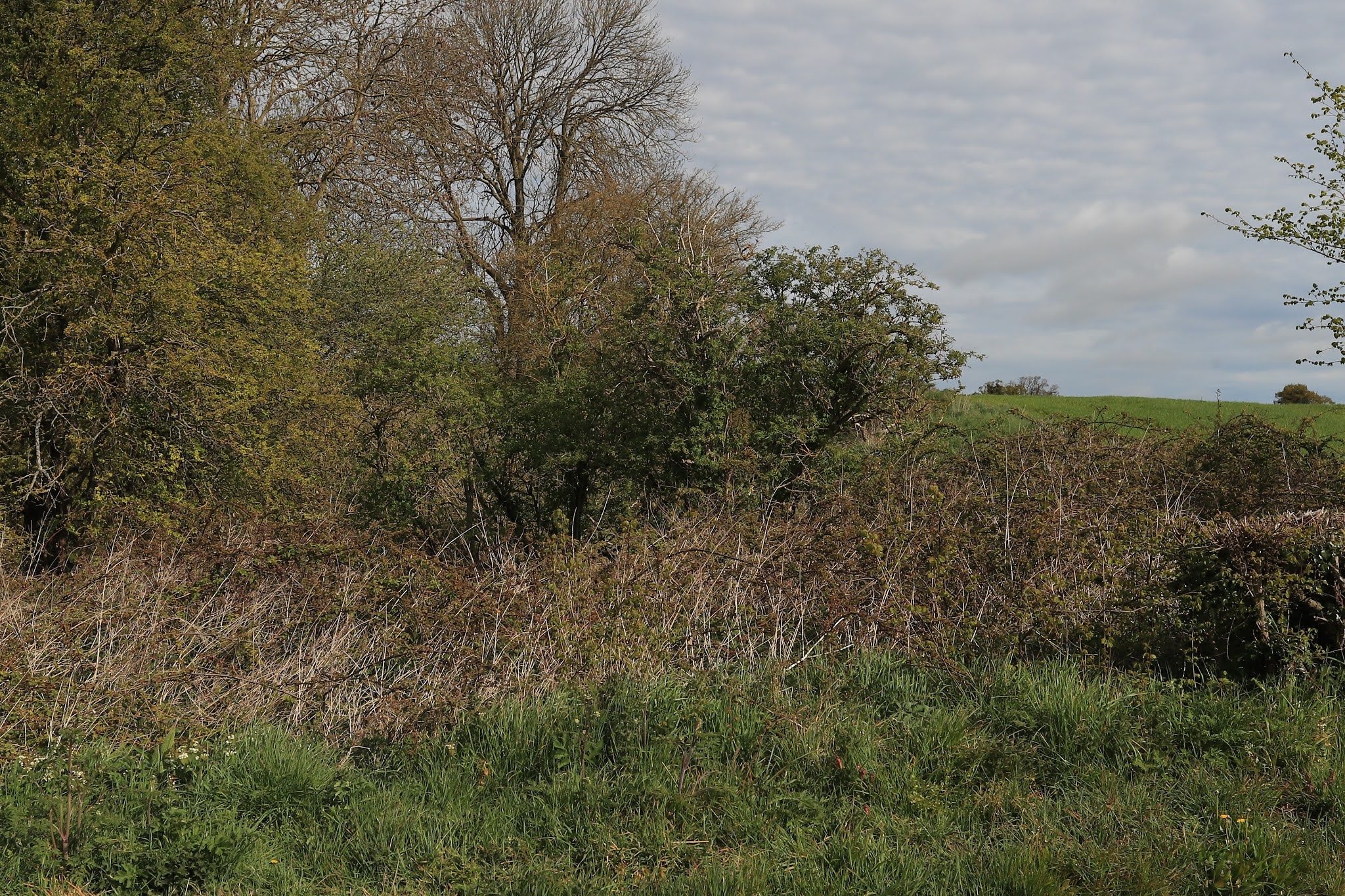
This next habitat near Watton, Norfolk, is prime Whitethroat habitat, and indeed, on the day of this visit on 9th May, a male Whitethroat was singing, performing its conspicuous song-flight, and sometimes uttering its alarm and agitated notes. The female was present and gave its "churr" agitation call. The male bird sand from several song-posts including small trees, Hawthorn and Elder. The nest is located in the foreground amongst low, tangled ground cover and nettles.Wednesday, 31 March 2021
Plan to ban dogs on North Norfolk Beaches - A Bad Move.
A bad move. Why ban dogs from our beaches? It is irresponsible dog owners, as well as some human visitors who disrespect and litter our beaches who should be banned. Let dogs have their enjoyment and freedom.
Thursday, 18 February 2021
Monday, 15 February 2021
Mockingbird Madness
Once again, we see that twitchers have given real birders a bad name by driving distances to see the Northern Mockingbird in Devon, whilst we still are under the restrictions of Covid, including travelling for essential journeys only.
I am disgusted at the behaviour by these wholly selfish idiots who are putting others lives at risk in their self-centred obsession to see a rare bird. If, for example, one of these idiots had an accident, the services and resources used to attend to them should be used for some poor person who really needs attention.
I notice from news reports that some of these idiots were issued a measly £200 fine, a fine they were undoubtedly prepared to risk to see this bird. Firstly, the fine was too small, and secondly, these irresponsible people should have had their driving licences withdrawn for a period of 6 months.
Once again, I wish to reiterate I am not, never have been, and will never be a twitcher-type. Too many examples in recent times have shown how twitchers have offended real birders by their breaking of current Covid restrictions, and at times, actions which have resulted in criminal activity.
I must add that some well-known bird guide sites should take some responsibility, along with those who release information on rare birds, for poor behaviour by selfish twitcher-types.
I am pleased to say that those who resort to rule breaking and criminal activity to see a rare bird, are in the minority, real birders look upon these idiots as disgusting, shameful people who are not welcome members of the birding community. I also find it rather strange when I invite twitchers to give their side of the story as to why they should break current restrictions and laws to see a rare bird that they fail to respond, come on, don't be shy, let's hear your side of the story.